
The 90 Seconds That Decide Whether a Live Viewer Buys
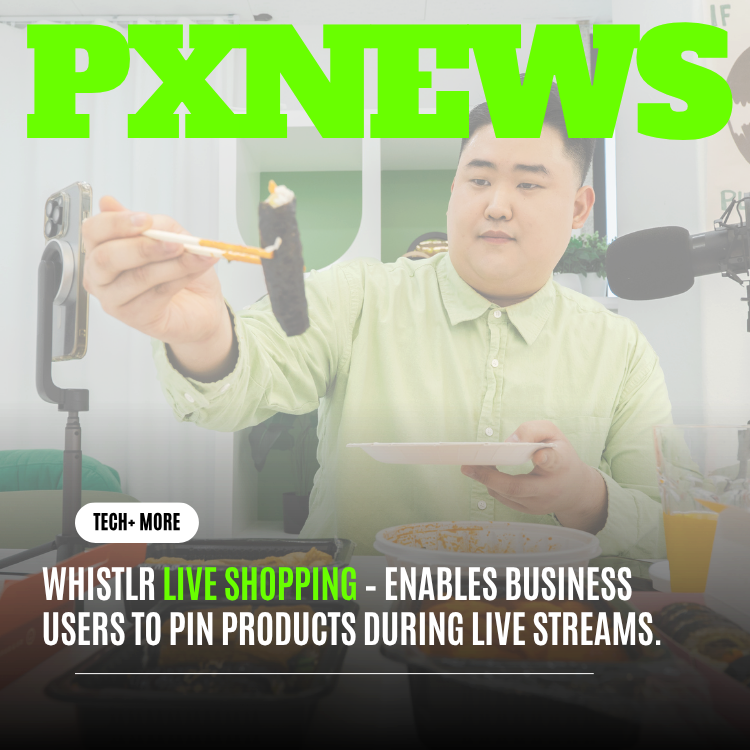
A viewer watching a live stream sees a jacket they want, reaches for their phone to search for it, and by the time they've typed the brand name into a search bar, the host has moved on to the next item. That gap — between wanting something and being able to buy it — is where most live-stream sales quietly die. Whistlr's Live Shopping tools are built to close it.
Live video has always been good at generating desire in the moment. What it has historically been bad at is converting that desire into a transaction before the moment passes. A creator holds up a product, talks about it for ninety seconds, and moves on — and unless a viewer is fast enough to screenshot a caption, dig through a bio link, or DM the host directly, the interest evaporates. Product Pins are Whistlr's answer to that gap: a way for business accounts to attach a buyable product directly to a live moment, so a viewer can go from watching to owning without leaving the stream.
Live commerce as a category isn't new — it has driven enormous transaction volume in markets like China for the better part of a decade, and interest among Western platforms has been building steadily as short-form video consumption has grown. What's been missing on most Western apps hasn't been viewer appetite, it's been the plumbing: a checkout fast enough to survive the fact that a viewer's attention on any single product rarely holds for more than a couple of minutes.
The 90-Second Window
Retailers who have run live commerce for years describe the same pattern: interest in a featured product spikes hard for roughly the length of time it's being actively shown, then falls off a cliff once the host moves to the next item. Whistlr's own early data mirrors that curve almost exactly. Across the first several hundred live shopping sessions run on the platform, click-through on a pinned product peaked in the first 90 seconds after it was highlighted and dropped by more than 70% within five minutes of the host moving on.
The comparison to a traditional storefront is instructive. A shopper who has to leave a live stream, open a browser, search for a brand, then search again for the specific item shown is, in effect, being asked to restart their entire purchase intent from zero, using a completely different mental context than the one that created the desire in the first place. E-commerce has always measured this kind of friction through cart abandonment, and live commerce turns out to have a steeper version of the same curve, because unlike a stored cart, a viewer's interest in a specific, no-longer-visible product doesn't wait around for them to come back.
That window is short, but it isn't small — it's just unforgiving of friction. Every extra tap between "I want that" and "I bought that" costs conversions. A viewer who has to leave the stream to search a website has, in practice, already lost the thread of the show, and most don't come back. Live Shopping treats that 90-second window as the entire game, and builds around minimizing every step inside it.
How Product Pins Work
Product Pins let a business account attach live, buyable listings to a stream in real time, without interrupting the broadcast. The mechanics are intentionally simple on the viewer's side, even though there's a fair amount happening underneath:
- Live pin overlay — a host taps a product from their catalog and it appears as a small, dismissible tag on the stream for every viewer, instantly.
- One-tap product view — tapping the pin opens the product without leaving the live view; the stream keeps playing in a minimized frame.
- In-app checkout — payment happens inside Whistlr using saved payment details, so there's no redirect to an external store and no re-entering a card number mid-stream.
- Multi-product queuing — hosts can line up several items in advance and pin them in sequence during a stream without breaking flow to search a catalog live.
- Post-stream pin replay — pinned products stay attached to the stream's replay, so viewers who watch later can still buy what was shown, not just what's in a caption.
None of this requires the host to stop talking. A pin can go up mid-sentence, and the checkout flow is designed to take under three taps for a viewer with saved payment details already on file — closer to the speed of a single-click reorder than a full storefront checkout.
What Hosts See on Their Side
None of this works unless it's just as frictionless for whoever is running the stream, and Product Pins were built with an equal amount of attention to the host side of the interaction. A business account managing a live stream gets a lightweight dashboard alongside the broadcast view — not a second screen to manage, but an overlay that shows which pinned items are getting taps in real time, without ever needing to leave the live interface to check.
That live feedback changes how a host actually runs a stream. A host who can see that a particular color or size variant is getting disproportionately more taps than the item currently being narrated can shift focus mid-stream, rather than finding out afterward, from a sales report, that viewers wanted something slightly different from what got the most airtime. For hosts running longer sessions, a running tally of pin taps versus completed purchases also surfaces where the checkout flow itself might be losing people — a distinction that used to be invisible when all a host had to go on was total sales at the end of the night.
The dashboard also handles the unglamorous logistics: inventory counts tied to each pinned product update live, so a host doesn't accidentally keep selling a size that sold out four minutes earlier, and pinned items automatically unpin themselves once stock hits zero rather than continuing to collect taps on something that can no longer be fulfilled.
A Small Business Case Study
Fern & Clay, a two-person ceramics studio that sells hand-thrown mugs and planters, started running monthly live "glaze reveal" streams in February, pinning each finished piece as it came off the shelf. In their first pinned stream, the studio sold through 34 pieces in a 45-minute window — inventory that, sold through their previous link-in-bio setup, had typically taken two to three weeks to move. The founders point to a specific detail: viewers who bought during the stream mostly bought the exact piece being shown at that moment, not something browsed afterward from a catalog page.
The studio's co-founder, who runs the live streams personally, described the shift in blunter terms: before pins, a live stream was essentially a video advertisement for a link she had to keep repeating out loud. After pins, it started functioning like an actual point of sale, with viewers checking out mid-conversation while she was still holding the next piece up to the camera. Nothing about the pottery changed. What changed was whether wanting it and buying it could happen in the same ten seconds.
That's the pattern Live Shopping is built around — not replacing a storefront, but capturing the specific, time-limited desire that a live moment creates. A viewer who wasn't thinking about buying a mug five minutes earlier bought one because they watched it get pulled out of a kiln and could tap once to claim it before the stream moved on.
Why Pinning Beats Linking in Bio
A bio link asks a viewer to remember something after the moment that convinced them has already passed — leave the stream, find the profile, find the link, find the right product among everything else listed there. Every one of those steps is a chance to lose the sale, and live commerce data consistently shows that each additional step between intent and purchase costs a meaningful share of conversion. Pinning collapses that entire chain into a single tap made at the moment interest is highest, which is also, reliably, the moment it's about to start declining.
There's a measurement benefit too, separate from the conversion lift. A bio link typically reports as a single undifferentiated number — total clicks — with no way to tell which moment in a stream actually drove them. A pinned product's sales attach directly to the specific item and the specific stream it was shown in, which means a host finishes a session already knowing which product, which framing, and which moment in the broadcast actually sold something, rather than guessing from an aggregate number days later.
It also changes what hosting a live stream is for. A creator or business no longer needs to interrupt their own broadcast to say "link in bio, go check it out" — a line that, however casually delivered, is also an admission that the sale isn't actually going to happen right now. With pins, the sale can happen right now, which changes how confidently a host can sell in the moment instead of hoping a viewer follows up later.
"Every live commerce platform talks about 'engagement.' We wanted to talk about the fifteen seconds after engagement, because that's the part that actually pays a small business's rent. If someone wants to buy while they're watching, nothing should stand between them and doing it."
Diego Ruiz, Commerce Lead, Whistlr
What's Next for Live Shopping on Whistlr
Product Pins launched first for individual items, but the roadmap extends further. Multi-item "drop" streams — where a business pins a limited run of several products in sequence and viewers can claim pieces before they sell out — are in testing with a small group of business accounts. Restock alerts tied to a specific pinned item, so a viewer who missed a sold-out piece gets notified the moment it's relisted, are next. Longer term, the team is building shared streams where two business accounts can co-host and split a pinned catalog, useful for smaller brands that don't yet have the audience to run a solo live show but can pool one with a partner.
A shoppable clips feature is also in early testing — short, algorithmically surfaced highlights from past live streams, each carrying its original pinned products, discoverable outside of the live moment itself. The idea is to let a purchase-worthy moment from a stream keep working long after the broadcast ends, instead of a pinned product's usefulness expiring the second the live indicator turns off.
The underlying bet is simple: live video is good at creating desire, and commerce tools should be measured by how much of that desire survives contact with a checkout flow. Ninety seconds isn't a lot of time to work with. Whistlr is building Live Shopping to need less of it.